
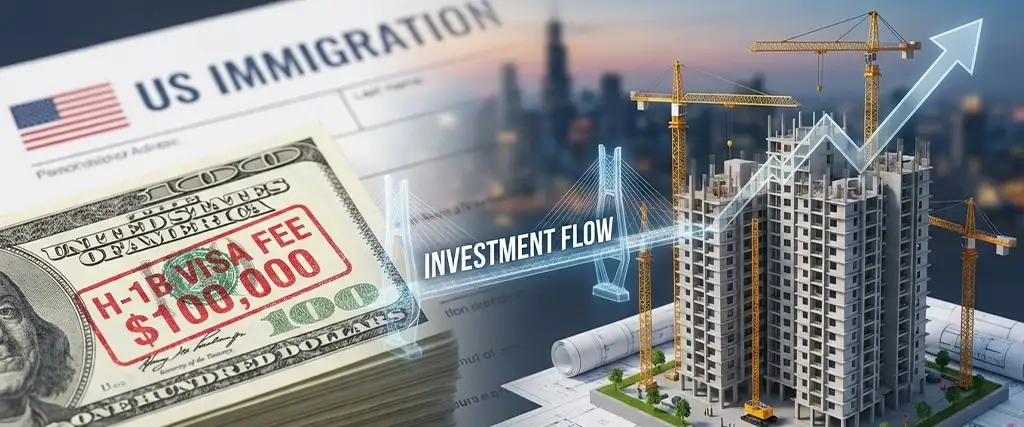
The recent decision by the US to impose a massive $100,000 annual fee for new H-1B work visa applicants has sent shockwaves through the Indian real estate market. Set to take effect on September 21, 2025, this policy is expected to have a significant, yet complex, impact on property buying in India’s major cities.
Since a huge 71% of H-1B visas in the last year went to Indian professionals, experts predict this much higher cost will discourage US companies from sending employees from India. This reduction in foreign job postings could eventually change how Non-Resident Indians (NRIs) choose to buy and invest in property back home.
At the same time, the US administration has introduced the “Gold Card” program, which gives a fast path to US residency for anyone who can provide a large donation $1 million for individuals or $2 million through corporate sponsorship. This move further highlights the focus on wealth over skills in US immigration policy.
The Dual Impact on Residential Homes
Many people first thought that returning NRIs would immediately cause a huge spike in residential property demand. However, property experts advise looking closer at the situation.
- Slower Home Buying: Most returning professionals will likely live with family or use their savings for a while before deciding to buy a home. They will prioritize settling down first.
- Focus on Premium Homes: Over time, NRIs are expected to favor high-quality homes that match global standards, such as luxury apartments and villas in cities like Mumbai, Pune, and Bengaluru.
- Need vs. Investment: Social media discussions show that NRIs will now focus on buying homes for their own use, rather than making speculative investments. This could boost demand for high-end housing, but reduce interest in buying second or third properties.
- Keeping Money Liquid: Many returning professionals may choose to keep their money easily accessible (liquid) instead of tying it up in real estate, especially given the ongoing uncertainties about job stability abroad.
As one real estate expert noted, “Returning NRIs will prioritize living arrangements for the first year or two. Property purchases will only follow once their work and financial situations stabilize.”
Commercial Property to See Faster Growth
The effects of the visa change are expected to show up faster in the commercial real estate market compared to the residential sector.
- Increased Office Demand: Global companies that now find it too expensive to hire H-1B workers in the US may choose to move those jobs to their India offices. This will create an instant need for bigger office spaces in cities like Mumbai, Pune, Chennai, and Hyderabad.
- Co-working Boom: There will likely be an immediate rise in demand for co-working spaces and flexible offices as companies hire more local staff quickly.
- Rents Will Rise: This increased demand for corporate real estate will likely lead to higher commercial rents in technology hubs like Bengaluru, where available office space is already limited.
This sudden need to hire returning Indian professionals in local offices will put immediate pressure on corporate real estate, especially in already busy office markets.
Bengaluru as the First City to Feel the Change
Bengaluru, India’s main IT hub with the largest number of tech workers, is expected to see the first and strongest impact from the policy change.
- Demand for Luxury Projects: As returning NRIs look for living standards similar to those they experienced globally, demand will grow sharply for premium apartments, villas, and secure gated communities.
- Stable Price Growth: However, large-scale speculative buying is unlikely. The main focus will be on buying for self-use, which should result in steady, gradual price increases instead of sudden, large spikes.
- Balanced Market: This stable growth in the luxury segment could help keep the overall market from getting too hot, making it a well-balanced market for both buyers and developers.
Wider Impact on the Indian Real Estate Market
The increase in visa fees comes when India’s massive IT industry is already facing global challenges. These difficulties may also encourage companies to hire more local talent, further increasing the demand for quality office space.
Akash Puri, Director-International at India Sotheby’s International Realty, commented: “Global investment and the ability to move talent easily go hand in hand. The H-1B cost increase may push some people to explore the Indian real estate markets, while the very wealthy NRIs may use the ‘Gold Card’ route. With good loan interest rates, real estate is becoming a top choice for investing again.”
Ultimately, this major global policy change is expected to mainly benefit premium residential projects and commercial spaces in India. The impact will be complex as the market adjusts:
- Residential Homes: Slow, steady growth, focused on luxury housing and primary residences.
- Commercial Property: Rapid growth in office complexes and flexible workspaces.
- Mid-Market Homes: Demand may stay constant or grow slowly until NRIs fully stabilize their finances.
Keystone Real Estate Advisory is your trusted partner, whether you are an investor looking for new opportunities or an NRI returning home. We provide the best advice for your real estate needs, from office spaces to luxury flats in Mumbai, Pune, and other metro areas.
Call us : +91 9860949793
Visit us: www.arkadethane.in